A value-added partner for made-to-measure industrial material solutions.
At Rekivo, we help customers find practical material solutions for their specific applications. Rather than limiting ourselves to a fixed range of materials or manufacturing processes, we work with trusted partners to match your requirements with the right materials, capabilities, and processes.
From metal and fiber to composites and other specialty materials, we focus on one thing: understanding what you need and finding the right way to make it happen.
Your application. Your requirements. Our solution.
Stainless Steel Knitted Wire Mesh
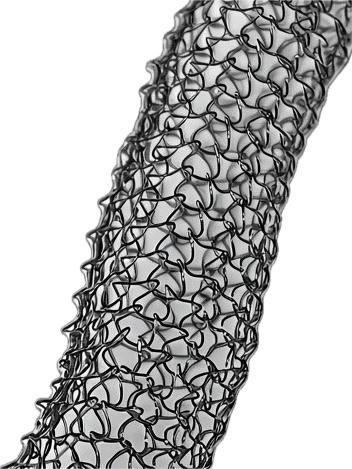
Stainless Steel Knitted Wire Mesh is a flexible three-dimensional metal structure formed from fine stainless steel wire into an interconnected knitted network. Its elastic architecture combines high mechanical flexibility, open porosity, conformability, and corrosion and temperature resistance, enabling reliable performance in demanding industrial environments.
Unlike conventional woven mesh, the knitted structure can be readily formed into tubes, sleeves, pads, and customized profiles. Its controlled mesh density and elastic behavior allow the material to be engineered for applications involving gas discharge, electromagnetic shielding, flexible contact, and mechanical movement.
Key Technical Parameters
Wire Material: AISI 304, 316, 316L and other stainless steel grades
Wire Diameter: 0.10-0.16 mm
Mesh Diameter: typically 5-10 mm, can be made to measure
Construction: single or double layer and wire knitted structure
Form: tubular, flattened, strip, pad, or customized geometry
Mesh density: 500g/m², customizable according to application requirements
Mesh count: 10-16, adjustable through wire diameter and knitting configuration
Surface condition: bright, annealed, or customized
Temperature resistance: suitable for elevated-temperature applications, depending on material and construction
Application 1: Ozone Generator Inner Electrodes
The elastic knitted structure provides a continuous conductive surface with high openness for efficient gas passage and stable electrical discharge. The mesh can be supplied in widths from 5–150 mm and formed tightly around an iron rod or other supporting core, maintaining close and resilient contact with the underlying geometry.
This flexible construction enables the electrode to accommodate dimensional variation while maintaining a consistent tubular form. Stainless steel also provides good resistance to ozone and oxidative operating environments, supporting long-term service in ozone generation systems.
Application 2: Flexible Cable EMI Shielding
Stainless steel knitted mesh can be manufactured as a flexible tubular shield for cables, wire harnesses, and electrical assemblies. The knitted architecture accommodates repeated articulation and bending while maintaining controlled window spacing throughout cable movement, helping preserve consistent shielding characteristics.
The shielding behavior can be engineered through wire diameter, mesh density, and tubular construction, providing effective EMI/RFI attenuation across a broad frequency range. Properly designed configurations can deliver excellent shielding performance from 500 kHz to 10 GHz. Interal lab recorded 0.11mm wire dia 304SS Shielding Effectiveness: 120dB, 10 MHz, E-field tested result.
Its combination of electrical conductivity, low structural weight, flexibility, corrosion resistance, and temperature capability makes stainless steel knitted shielding particularly suitable for severe, corrosive, and mechanically demanding environments.
Wire grade, diameter, mesh density, layer configuration, tubular dimensions, and knitting pattern can be tailored to achieve the required combination of elasticity, porosity, mechanical resilience, conductivity, shielding performance, and environmental resistance.
Magnesium Anode Rod
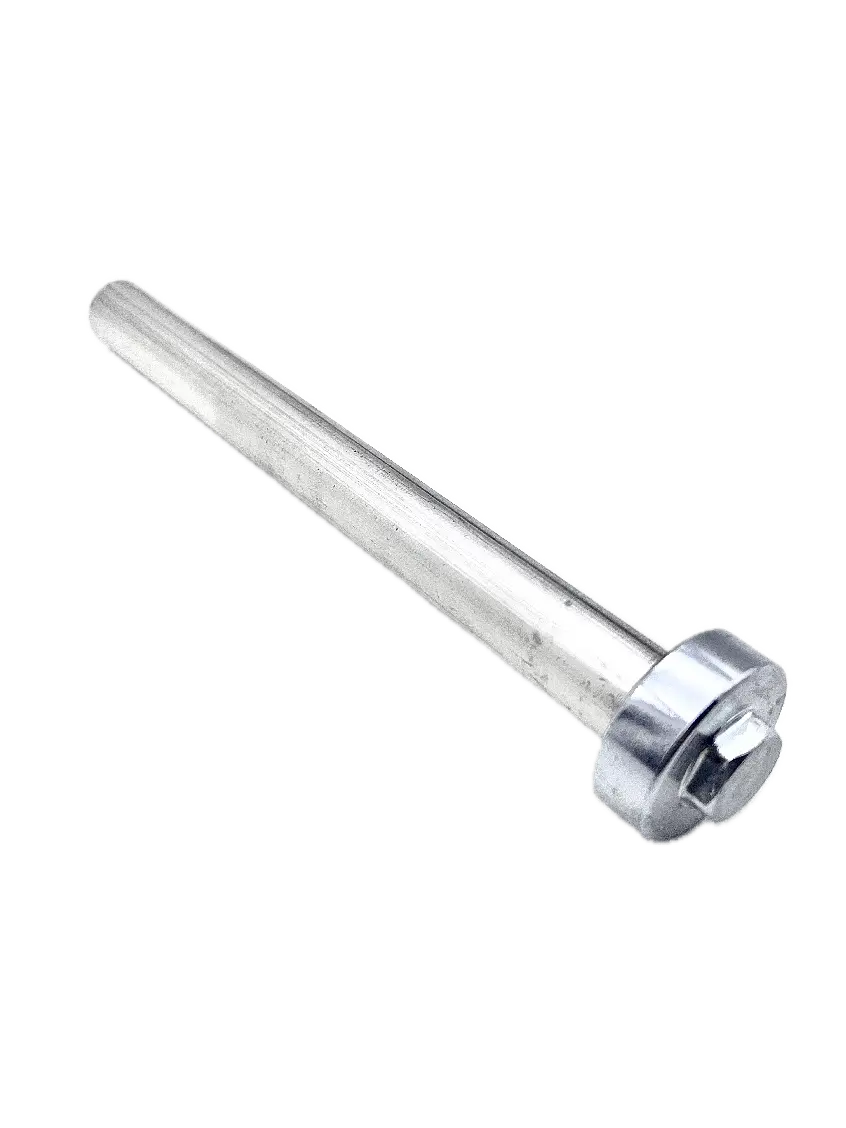
Magnesium Anode Rod is a sacrificial anode for cathodic corrosion protection. Manufactured from electrochemically active magnesium alloy, it preferentially corrodes to provide protective current to metallic structures, helping minimize corrosion and extend service life.
Key Technical Parameters
Material: AZ31B, AZ63B magnesium alloy
Construction: magnesium alloy anode with steel core
Weight: determined by alloy, dimensions, and core configuration
Typical Application: Water Storage Heater Sacrificial Anode
Installed inside the water tank, the magnesium anode rod acts as a sacrificial component, preferentially corroding to protect the steel tank from electrochemical corrosion. The anode gradually consumes during service and can be replaced as part of routine maintenance.
The magnesium anode rod is applicable to 30-100L commercial and industrial water storage heaters. The regular replacement cycle is 6 to 24 months, depending on water usage, frequency of use, water quality, and etc.
Custom alloy composition, dimensions, core configuration, thread specifications, and connection details are available to meet specific customer requirements.
Glass Fiber 3D Spacer Fabric
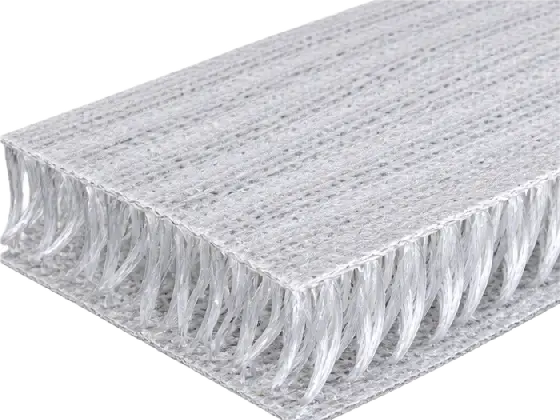
Glass Fiber 3D Spacer Fabric is an integral three-dimensional glass-fiber reinforcement consisting of two woven fiberglass skins interconnected by vertical Z-axis yarns. After resin infusion, the structure forms a lightweight, rigid composite core with high resistance to impact, thermal shock, and interlaminar separation.
Unlike conventional foam or balsa cores, its hollow 3D architecture can provide additional functional space for thermal-fluid circulation, gas venting, or leak detection while maintaining structural reinforcement.
Key Technical Parameters
Core thickness: 3–8 mm, application-dependent
Skin thickness: 0.35 mm
Fabric width: maximum width > 1m, application-dependent
Fabric weight: typically 700–900 g/m², depending on construction
Skin construction: woven fiberglass face layers
Core Z-axis reinforcement: integral connecting glass-fiber yarns
Core Z-fiber geometry: customizable profiles such as 8, I, V, etc.
Core density: customizable according to stiffness and compression requirements
Fiber type: E-glass and other technical fibers available
Resin compatibility: epoxy, phenolic, vinyl ester, polyester and other compatible systems
Core architecture: customized skin/core ratio, yarn configuration and internal geometry
Application 1: EV Battery Pack Enclosures
The material can be engineered as a lightweight structural and thermal barrier within battery enclosures. High-strength fiberglass skins provide mechanical protection, while the 3D Z-axis structure maintains core integrity under impact and thermal loading. Low densities enable significant weight reduction compared with conventional solid laminates or metal housings. With a suitable high-temperature or phenolic resin system, the composite can provide enhanced fire resistance. The hollow core (adjustable height typically 3–20 mm) may also be configured for gas venting or coolant circulation, integrating multiple functions into a single structural component.
Application 2: Cryogenic & LNG Containment
For cryogenic and LNG structures, the integrated Z-axis reinforcement mechanically connects the two skins and helps maintain structural integrity during severe temperature cycling (down to –196 °C). The hollow core can be utilized as a secondary monitoring space, including controlled gas circulation for leak detection, while simultaneously contributing to insulation and structural reinforcement. low density range, combined with low thermal conductivity inherent to the air-filled core, support efficient thermal performance alongside mechanical reliability.
Application 3: Antenna Radomes
The 3D fiber can be used in antenna radomes for communication base stations, radar systems, and related RF applications. The high air content in the hollow core delivers an equivalent dielectric constant of approximately 2.0–2.2 (compared with 3.4–4.3 for solid glass-fiber-reinforced plastic). Transmission losses are typically 0.2–0.3 dB in L/C bands, providing high wave transparency suitable for multi-band and 5G applications. Low density also makes it lighter than than conventional autoclave-cured honeycomb or foam sandwiches.
We can tailor the core & skin thickness, fabric weight, core & skin construction, Z-yarn density, Z-fiber geometry, fiber type, and resin system to achieve the required combination of structural strength, thermal performance, weight, and functional cavity volume.
Ceramifiable Silicone Foam
Ceramifiable Silicone Foam is an advanced elastic cushioning material designed for battery cell expansion, compression control, and thermal protection. Unlike PU and EVA foams, which can suffer from compression set and permanent loss of springiness, silicone foam offers low compression set—typically below 5%—and rapid elastic recovery.
During normal operation, the foam accommodates cell expansion and contraction while maintaining controlled contact pressure. In a thermal event, the material transforms into a rigid ceramic-like protective layer, helping resist flame, heat, and thermal propagation.
Key Features
Compression set typically <5%
Immediate elastic recovery
Compression stress: 0.3–0.5 MPa at 30% compression
Suitable for cell expansion forces from several kN to 20 kN
High-temperature ceramification for enhanced thermal protection
Excellent fire impact and thermal insulation, with maximum resistance up to 1100℃
Custom-engineered for battery module and cell-to-cell applications
Typical Battery Application
For 314 Ah cells with a nominal thickness of 72.8 mm, the recommended gap is typically 2–3% of cell thickness, approximately 1.5–2 mm, depending on the module design and required compression force.
Available Configurations
Return Frame
Full Cover
Two Vertical Runners
Custom thickness, dimensions, die-cut profiles, and compression characteristics are available to match specific battery module designs.
About
Founded in 2026 by 3 sales engineers, Rekivo was built on years of experience connecting customers with materials, technologies, and manufacturers across different industries.
Our team shares knowledge and insights on customer applications, technical specifications, costs, manufacturing capabilities, and market needs across our network. This gives us a broader view of what is possible—and helps us find the right resources for each project.
We don’t need to manufacture everything ourselves. Instead, we focus on understanding your requirements, coordinating the right partners, and delivering solutions made to measure.
Have a specific specification, a difficult-to-source product, or an idea that needs to be developed? Talk to us. Let’s find a way to make it work.
Contact
Yijun Zhao
Phone: +86 183 0186 1768
Email: rekivo@rekivoproducts.com
Drop Us A Message
Office Address & Time
4th Floor, Kerry Centre, No. 1155 Fangdian Road, Pudong New Area, Shanghai
9:00-17:00, Mon-Fri
Elements
Text
This is bold and this is strong. This is italic and this is emphasized.
This is superscript text and this is subscript text.
This is underlined and this is code: for (;;) { ... }. Finally, this is a link.
Heading Level 2
Heading Level 3
Heading Level 4
Heading Level 5
Heading Level 6
Blockquote
Fringilla nisl. Donec accumsan interdum nisi, quis tincidunt felis sagittis eget tempus euismod. Vestibulum ante ipsum primis in faucibus vestibulum. Blandit adipiscing eu felis iaculis volutpat ac adipiscing accumsan faucibus. Vestibulum ante ipsum primis in faucibus lorem ipsum dolor sit amet nullam adipiscing eu felis.
Preformatted
i = 0;

while (!deck.isInOrder()) {
    print 'Iteration ' + i;
    deck.shuffle();
    i++;
}

print 'It took ' + i + ' iterations to sort the deck.';